
Concert Etiquette: 8 Essential Tips for Live Shows

Updated: Sep 14
You arrive at The Northcourt LIVE in Abingdon with friends, confirm the booking under the name used for the tickets, join the queue and find a sensible place in the standing crowd. Nobody has to push past anyone, a phone stays out of the way once the performance begins, and your group knows where to meet if anyone gets separated. At the end, you leave without blocking the exit or turning a small delay into an argument.
That's concert etiquette in practice. It isn't about taking the energy out of a show. It's about balancing enthusiasm with safety, sightlines, accessibility and respect in a primarily standing venue with a capacity of 200. The Northcourt LIVE is an adult live-music environment, and ages 14–18 must be accompanied and supervised by a responsible adult. Some performances may contain strong language or other material unsuitable for younger guests, alcohol is not served to under-18s, and individual event restrictions should always be checked.
The following eight tips cover the behaviours that make the biggest difference, whether you're attending with family, meeting friends, or going to a tribute show for the first time. To see what's coming up, Check out our upcoming line-up at The Northcourt LIVE ticket page.
1. Respect personal space and avoid aggressive pushing
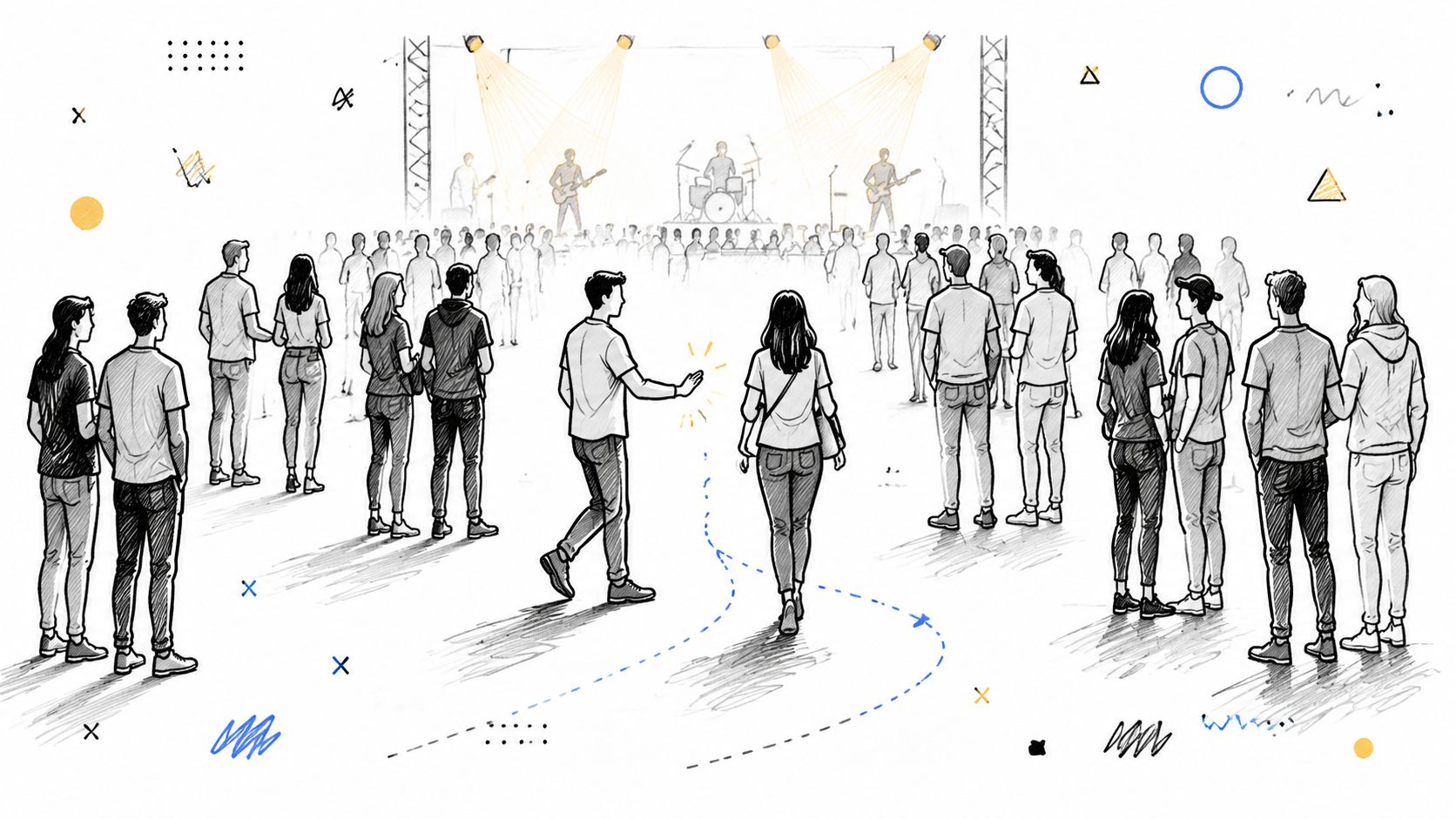
A standing crowd naturally shifts. People move to get drinks, make room for friends, or find a clearer view. That movement is normal, but pushing, shoving and forceful progress through the room can turn ordinary crowd movement into a safety problem.
If you need to pass, make eye contact and ask politely. A brief “excuse me” gives people time to move their feet and protect their drinks. Pushing through without warning is especially unpleasant for shorter attendees, anyone with a mobility limitation, and people who are already holding their position carefully.
Move with purpose, not force
Keep your arms and belongings close to your body, particularly when the room is busy. If someone bumps into you, assume it was accidental before treating it as deliberate. In a compact standing venue, small misunderstandings can escalate quickly when people respond angrily to ordinary contact.
Consider your position when you settle. Standing directly in front of someone much shorter can remove their view for the entire performance, even if you haven't technically pushed in front of them. A slight shift to one side may give both of you a better sightline.
Practical rule: If you can reach your destination by asking rather than forcing your way through, ask.
During the busiest moments, staying relatively still helps the people around you. Constant shifting, dancing across a wide area or repeatedly stepping backwards makes the crowd work around you. Enjoy yourself, but keep your movement proportionate to the space available.
2. Put your phone away during the performance
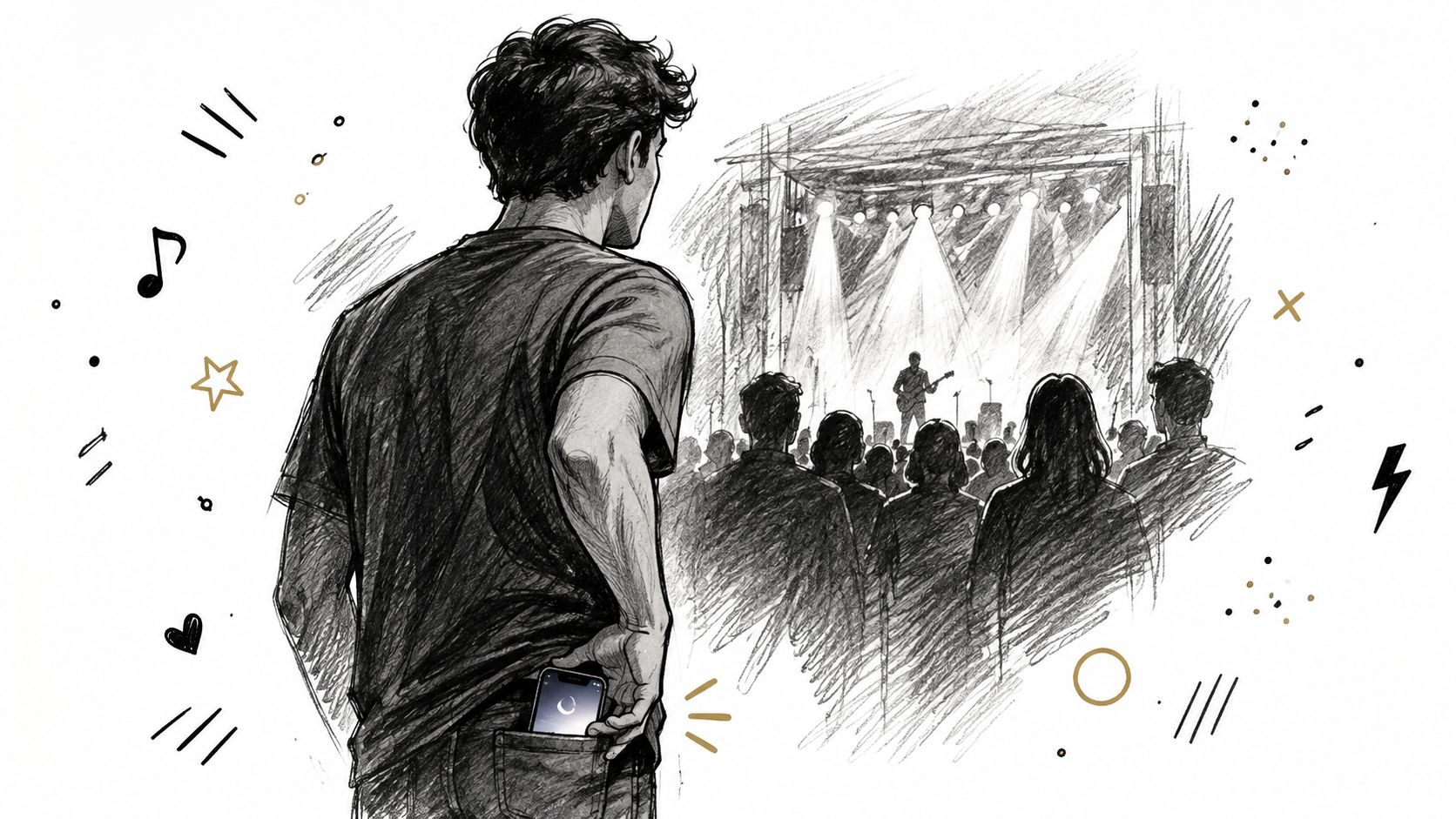
A phone can help with admission and communication, but it can also become the most visible distraction in the room. A bright screen, raised above head height, affects the people behind it even when the owner is only trying to capture a short memory.
The tension around filming is clear in UK audience research. Seventy per cent of British gig-goers said they find other people's photo or video use irritating, 69% supported measures to reduce filming, and 65% said phone recording can make them feel as if they're missing the event itself. These figures come from Music Week's reporting on gig-goers and mobile phones.
That doesn't mean every photograph is inconsiderate. The useful distinction is between a quick, discreet reminder and allowing your phone to take over the show.
Choose a stopping point
A short clip of a favourite moment is very different from filming an entire song while holding the device high. Checking a message during a break is different from scrolling through social media while the performers are playing. Before the performance starts, silence notifications and decide that you'll put the phone away after taking any brief photo or clip.
If you need to check something, lower the brightness and move towards the side or rear where possible. Don't stand in the middle of the crowd with your screen raised while other people try to see the stage.
In a 200-capacity venue, each raised phone is easy to notice. The person behind you can't move their view out of the way without affecting someone else.
A good phone policy is simple: capture a moment, then return your attention to the performers.
Some shows may have specific restrictions, so check the event information before attending. If the venue or artist asks for phones to be put away, follow that instruction rather than assuming a general preference gives you permission to keep recording.
3. Arrive on time and respect the published schedule
The best arrival plan starts with the booking confirmation. Check the stated door and performance information, then allow time for the journey, parking and the walk to the entrance. The Northcourt LIVE has free on-site parking, but planning around the possibility of a busy arrival is more sensible than assuming you'll drive straight into the nearest space.
Aim to be ready before the published schedule rather than treating the start time as the moment to leave home. A late group creates several small disruptions at once. Someone has to find a gap, others need to move aside, and people who have already settled may lose their view while the group gets organised.
Make admission straightforward
Customers do not need to print tickets. Admission is checked against the booking list using the name under which the tickets were booked, so make sure the person responsible for the booking knows that name and can communicate it clearly.
For advice on planning ahead, see advance ticket booking guidance. It's particularly useful when several friends are coordinating one booking, because a group can avoid confusion by agreeing who made the booking and who will arrive with that information.
If you're delayed, contact the people you're attending with. They can decide whether to wait, enter without you, or agree a meeting point that doesn't interfere with the entrance. Don't ask staff to bend the schedule for a group that chose to arrive late.
A first-time tribute-show attendee may not know how the evening is organised, so share the confirmed information with them rather than leaving one person to work it out at the door. Clear preparation keeps the queue moving and reduces pressure on staff.
4. Don't shout or have loud conversations during the performance
A lively audience is part of a live music event. Cheering, clapping and singing along at appropriate moments support the performance. The problem is ongoing conversation at a volume that competes with the music, particularly when people nearby are trying to hear vocals or quieter passages.
Save detailed conversations for gaps between songs or a suitable break. If someone in your group needs to discuss travel, work or arrangements, move away from the densest part of the audience and speak in a hushed tone. A phone call in the middle of a performance is especially disruptive, because the caller and the surrounding audience can hear both sides of it.
Enthusiasm has a useful volume control
There's a clear difference between joining a chorus and talking through one. Calling out a greeting to the performers can be part of the atmosphere. Arguing about a song choice, recounting your day or shouting across the room isn't.
Before the show starts, agree a simple signal if someone needs to leave the group. That avoids repeated shouting between friends. Groups can also reduce disruption by deciding where they'll regroup after the performance rather than trying to make arrangements while the music is playing.
Cheering adds to a performance. A conversation held over the vocals takes something away from everyone within earshot.
In a relatively compact standing space, voices carry. You may think you're speaking only to the person next to you, but the people immediately around you may hear every word. Lowering your voice is usually enough. If it isn't, move.
5. Don't block others' views intentionally
Standing-room sightlines require constant awareness because there's no fixed seat position to protect. You can't change your height, and you shouldn't be expected to remain completely still, but you can choose a position that limits the obstruction you create.
If you're particularly tall, standing towards the side rather than directly in front of a shorter person may help. If someone politely explains that they can't see, a small sideways adjustment can solve the problem without turning it into a confrontation. Deliberately stepping in front of someone who has already chosen a clear position is different from naturally finding your own space.
Check the effect of your position
A quick glance behind you can show whether your position blocks one person or a much wider section. Keep raised phones, arms and signs to a minimum, especially during the main performance. A brief photo at chest level is less intrusive than holding a device above your head for several minutes.
Families need extra consideration. Children and shorter adults may have fewer options for finding a sightline, particularly when the room is busy. An adult accompanying a young person should also avoid placing them where crowd movement could make them uncomfortable, while respecting the venue's age requirements and the guidance provided for the event.
If moving slightly is enough, do it without making an issue of the request. The aim isn't to guarantee every person an uninterrupted view from the exact spot they want. It's to avoid making a reasonable problem worse through stubbornness or deliberate obstruction.
6. Respect venue rules and staff instructions
Venue rules exist to manage risks that individual audience members can't see from inside the crowd. They may cover behaviour, access, movement around the building and what staff need attendees to do in particular circumstances. You don't have to agree with every rule to follow it.
Read the event information and check The Northcourt LIVE Venue Guide before attending. If you're unsure about something, ask staff calmly. A question at the entrance is more useful than an argument after an instruction has been given.
The Paul Robins Promotions zero tolerance policy is relevant to crowd conduct and staff directions. Aggressive behaviour, harassment, discrimination, violence and unsafe crowd activity have no place at a live show. Staff may also need people to move, pause or leave an area to protect others.
Accessibility needs deserve early planning
If you or someone in your group has an accessibility requirement, contact Paul Robins Promotions before the event to discuss available options. Don't rely on a friend to explain an urgent need in the middle of a crowded arrival. Advance communication gives the team a better chance to provide accurate guidance without making assumptions.
The same applies to families attending an adult live-music environment. ages 14–18 must be accompanied and supervised by a responsible adult, some performances may contain strong language or other material unsuitable for younger guests, and alcohol is not served to under-18s. Specific event information should always be checked before making arrangements. Venue policies can vary by event, so don't invent your own exception.
Staff aren't there to win an argument. They're there to apply the published expectations and respond to what's happening in the room. Cooperating promptly helps them focus on the wider audience.
7. Don't record or film entire performances without permission
A short personal clip and a full unauthorised recording are not the same thing. Filming a substantial part of a performance can interfere with other people's views and may conflict with the performer's or event's recording policy. Uploading a complete song or extended section also turns a personal phone recording into public distribution without clear permission.
Check the event or artist guidance before recording. If filming is permitted, keep the device low, record briefly and stop before it becomes a substitute for watching the performance. The people behind you shouldn't have to look through your screen for the duration of a song.
Use a light-touch approach
A practical boundary is to take one quick photo or a short clip, then put the phone away. Don't hold it above your head, don't move it from side to side, and don't keep recording because the first clip didn't come out perfectly.
The issue isn't only technical or legal. It's also social. In 2026 YouGov research, 22% of Britons attending concerts said they frequently use their phones to capture visuals or take pictures, while 12% of those users said they always share their concert experiences on social media. The same survey found that 25% had witnessed aggressive or disruptive crowd behaviour, 22% had seen objects thrown at performers, and 39% had experienced prolonged waits at entry or exit. These figures are reported in YouGov's survey of British concertgoers.
That evidence doesn't make every recording wrong. It does show why personal phone use, crowd conduct and practical event management now overlap. A discreet clip respects both the audience and the performance. A full recording held high does neither.
8. Be mindful of your drinks and don't spill on others
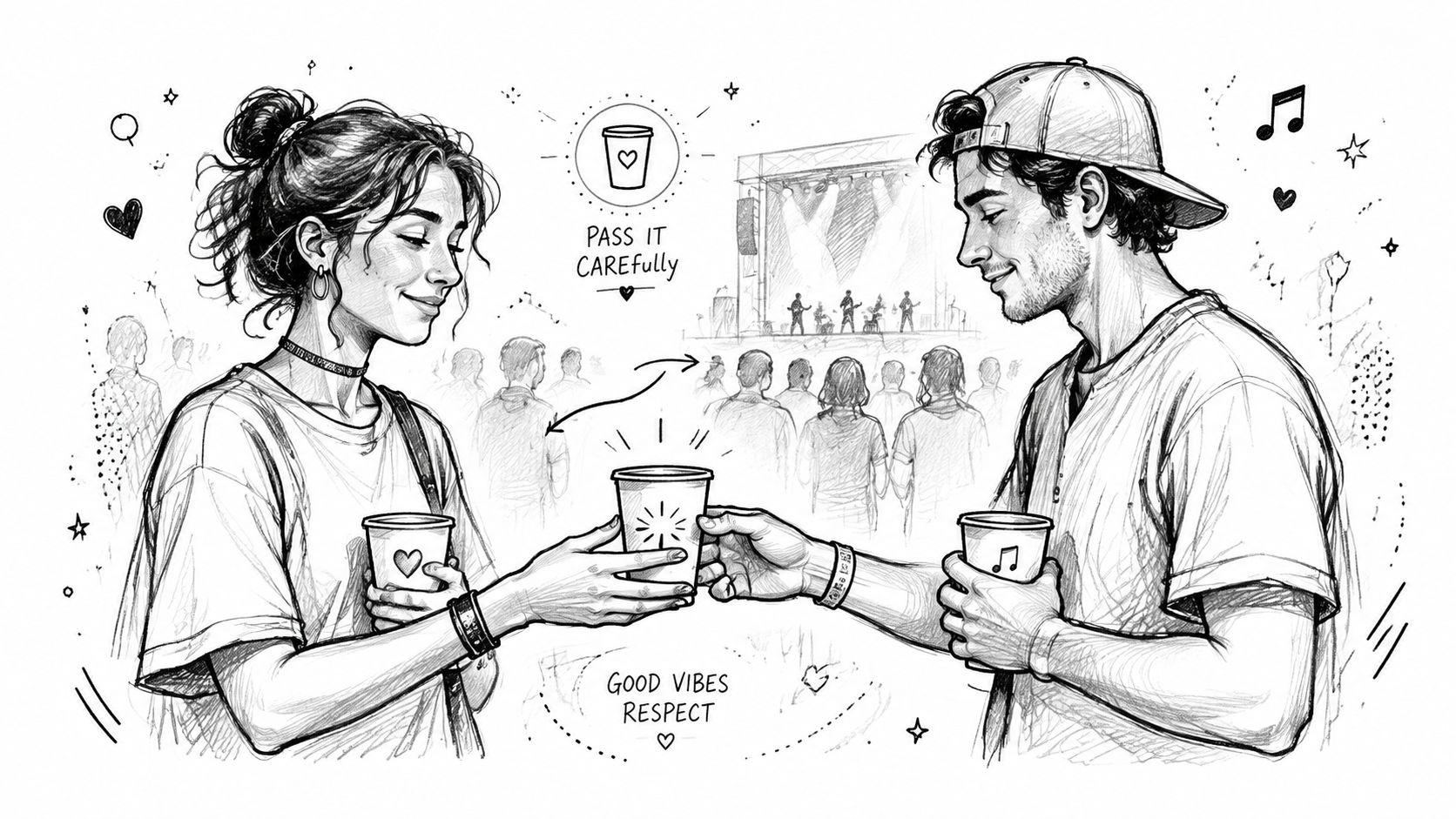
Drinks and standing crowds require deliberate handling. A cup held at shoulder height can be knocked by a passing arm, a dance movement or an unexpected shift in the crowd. The result may be an avoidable stain, a damaged phone or a tense exchange with someone who was enjoying the show.
Keep your drink close to your body and use both hands when moving through a crowded area. If you need to pass, warn the people immediately ahead and move slowly. Don't stretch a drink over someone's shoulder or place it where a passing person is likely to catch it.
Respond properly when accidents happen
You may decide not to carry a drink during the most crowded moments. That's a reasonable trade-off if you're near the front of a busy area or moving frequently. When standing still, keep it in a stable position rather than waving it while talking or dancing.
If you do spill something, apologise immediately and offer tissues or help with cleaning. A quick, sincere response can prevent an accident becoming a dispute. Keep a small number of tissues handy, especially if your group is carrying drinks through the crowd.
The same courtesy applies when moving away at the end. Don't leave a cup in a place where it can trip someone or obstruct people trying to exit. Follow staff directions about where to put it, and leave your immediate area as clear as you found it.
8-Point Concert Etiquette Comparison
Item | Implementation complexity | Resource requirements | Expected outcomes | Ideal use cases | Key advantages |
|---|---|---|---|---|---|
Respect Personal Space and Avoid Aggressive Pushing | Low, requires awareness and restraint | Minimal, personal patience and courtesy | Safer, more comfortable crowd; fewer conflicts | Standing venues and crowded entry/exit periods | Reduces injury risk; improves atmosphere |
Put Your Phone Away During the Performance | Medium, requires self-discipline | Minimal, silence/put away phone | Increased presence and immersion; fewer distractions | Darkened or intimate performances | Better audience engagement; shows respect to performers |
Arrive on Time and Respect the Published Schedule | Low, needs planning and punctuality | Time planning, transport/parking arrangements | Fewer disruptions; better positioning; less stress | All shows, especially fixed-start events | Prevents late-entry disturbance; ensures you don't miss the start |
Don't Shout or Have Loud Conversations During the Performance | Medium, self-control in social settings | Minimal, awareness and restraint | Clearer audio for all; focused performance | Vocal passages, quieter sets, general performances | Preserves sound clarity; respectful environment |
Don't Block Others' Views Intentionally | Low, mindful positioning and posture | Minimal, occasional repositioning | Fair sightlines; reduced frustration among attendees | Standing crowds, mixed-height audiences | Equitable viewing; fewer disputes |
Respect Venue Rules and Staff Instructions | Low-Medium, read rules and comply | Time to check policies; ID/tickets as required | Safer, orderly event and smoother operations | Security checks, restricted-item policies, accessibility needs | Ensures safety; maintains venue's ability to host events |
Don't Record or Film Entire Performances Without Permission | Medium, check policies and exercise restraint | Knowledge of venue/artist recording policy | Protects artists' rights; less obstruction for others | Copyright-sensitive shows or artists with bans | Respects IP and artists; improves live experience |
Be Mindful of Your Drinks and Don't Spill on Others | Low, careful handling and spatial awareness | Minimal, hold drinks securely; napkins | Fewer spills; cleaner, more pleasant venue | Crowded standing venues with bars | Protects clothing/belongings; prevents conflicts |
Enjoy the show without becoming the problem
Before leaving for The Northcourt LIVE, confirm the individual event information and make sure the person who booked the tickets knows the booking name. Customers don't need to print anything, because admission is checked against the booking list using the name under which the tickets were booked. That simple detail matters when a group arrives separately or one person is delayed.
Review the official venue guidance when it's relevant to your plans. The Northcourt LIVE is in Abingdon, Oxfordshire, has a capacity of 200, is primarily standing, and has free on-site parking. It's an adult live-music environment, and ages 14–18 must be accompanied and supervised by a responsible adult. Some performances may contain strong language or other material unsuitable for younger guests, alcohol is not served to under-18s, and event-specific restrictions should always be checked. Don't assume that an arrangement from a different event applies here. Check the information for the show you're attending.
Groups should also agree a practical meeting plan. Choose a location that won't obstruct the entrance, bar area or exit, and make sure everyone knows what to do if a phone battery runs down or someone needs to leave early. Families may need a more deliberate plan for comfort and supervision, while first-time tribute-show attendees may appreciate knowing that the room is primarily standing and that crowd position affects the view.
UK audiences are increasingly sensitive to the practical side of a night out. A 2024 UK live music audience study found that 36% agreed other people had forgotten how to behave in crowds, rising to 43% in London and 50% among country and metal fans. The same research found that 25% felt less tolerant overall and 25% were more easily frustrated, according to LIVE's 2024 audience trends research. Those figures make courtesy more than a vague ideal. They show why small choices around space, noise and patience matter.
A later UK live-music survey found that 31% felt queuing for drinks had become more painful than they remembered, rising to 41% among 18 to 24-year-olds, while one in five believed higher ticket prices brought higher expectations, rising to one in three among 18 to 34-year-olds. The findings are available in the UK Live Music Report 2023. When expectations are high, staff instructions and considerate queueing become even more important.
The final check is straightforward:
Move courteously: Ask before passing, avoid aggressive pushing and stay aware of the space around you.
Film unobtrusively: Keep any recording brief, low and within the event's rules.
Protect sightlines: Don't deliberately block people, and adjust your position where a small move helps.
Control your volume: Cheer and sing along, but save conversations for suitable gaps.
Follow staff instructions: Treat venue rules as part of the event, not as a personal challenge.
Plan for accessibility: Contact Paul Robins Promotions in advance about access requirements.
Handle drinks carefully: Keep them secure and respond promptly if you spill.
Leave considerately: Follow directions, avoid blocking routes and let other people depart safely.
Good concert etiquette doesn't make a standing show formal or restrained. It gives everyone more room to enjoy the music without turning another attendee's night into an obstacle course.
Paul Robins Promotions provides official event information and online tickets for live music events at The Northcourt LIVE in Abingdon, Oxfordshire. Visit Paul Robins Promotions to plan your next show, check the venue guidance and choose an event where courteous audience behaviour starts before you reach the door.
Live photography: Alienation Photography — used with permission.
