
Age Restrictions at Concerts: How Old Do You Have to Be to Go to a Concert in the UK?

Updated: Oct 13
You've bought the tickets, your 14-year-old is excited, and everyone arrives at the venue assuming the hard part is over. Then security checks the event conditions and says your child can't enter the standing area, or that the accompanying adult doesn't meet the stated requirement. The ticket is valid, but admission is refused.
That situation is avoidable. Age restrictions at concerts aren't governed by one universal UK rule. The actual decision can depend on licensing conditions, the venue's own policy, the promoter's instructions, the event time, and the zone printed on the ticket. "All ages" can still fail to mean every age in every part of the building.
How Old Do You Have to Be to Go to a Concert in the UK?
There's no single legal minimum age for attending a concert in the UK. Instead, practical restrictions come from three sources: the venue's premises licence, the promoter's event terms, and the performer's own requirements. Government guidance under the Licensing Act 2003 recognises age limits, adult-accompaniment conditions, time restrictions and full exclusion of under-18s as possible controls when children's protection requires them.
I've seen many families confused by this flexibility. A venue may be "all ages" for one show and adults-only for another, depending on who's touring and what the local licensing authority permits. That's why the first question isn't "what's the rule?" but "what does my specific event say?"
The confusion usually starts when buyers treat a venue's general guidance as if it were the final rule for every show. It isn't. A grassroots room can admit younger fans for one event and operate as an adults-only space for another, depending on the promoter's arrangements and the conditions applying to that performance.
Practical rule: A valid ticket proves you bought admission. It doesn't override an age condition.
The difference between attending and taking part also matters. UK government guidance says a child under school leaving age may need a performance licence when appearing in a concert or other public performance that audiences pay to see, or when the performance takes place on licensed premises. The guidance says those licensing requirements apply until compulsory school leaving age, generally lasting until the last Friday in June of the school year in which the child turns 16. See the government guidance on performance licences for children.
That legal distinction helps explain why organisers treat minors' participation as a safeguarding matter rather than a simple ticketing preference. For families buying tickets, the useful lesson is simpler: never rely on a generic age label when the event page gives more specific instructions.
Check the exact show details before paying, especially if the attendee is under 16, the ticket is for standing admission, or the concert may run late. If the listing is unclear, contact the official box office or venue directly. Don't assume that rules from a previous visit will carry over.
How Old Do You Have to Be to Stand at a Concert?
Most families hit a wall. A concert may be advertised as "all ages" or "under 16s accompanied," but that doesn't guarantee younger attendees can access the standing floor. Standing areas create denser crowds, less predictable movement and more demanding supervision than seated zones, so promoters frequently impose stricter age rules there.
In my experience, the biggest gap is understanding accompaniment ratios. Many large-event terms specify not just that younger teens must be accompanied, but exactly how many adults are required per group. For example, standing-area terms commonly state that ages 14 and 15 must be accompanied by an adult aged 18 or over at all times, with a ratio of one adult to four attendees aged 14 and 15. Such terms may also limit standing admission entirely for certain shows.
The short answer: there's no universal minimum age to stand at a concert. It depends on the venue, the promoter, the event's licence conditions, and whether alcohol is being served. Some venues allow under-16s on the floor with an adult; others prohibit it entirely regardless of accompaniment. Ticketmaster UK's age-restriction guidance and example event standing terms both show why buyers need to read the exact listing rather than rely on a venue's general label.
Can Under-14s Stand at Concerts?
Most venues require accompaniment for under-14s and many prohibit them from standing areas altogether. I've seen promoters often list age rules but not standing-zone specifics, which is why checking the individual event page is critical.
Some venues permit under-14s in seated areas with an accompanying adult but block them from pitch standing. Others set a hard minimum age for standing admission—often 14 or 16—regardless of supervision. A few operate as fully all-ages spaces but still enforce Challenge 25 at bars, which can affect younger attendees if they're near alcohol service areas.
The safest approach: assume standing-area access is the stricter condition and verify it on the event page before travelling. If the listing doesn't explicitly address under-14s on the floor, contact the venue directly.
How Old Do You Have to Be to Attend a Concert Without an Adult?
This question comes up constantly for families planning independent outings for teens. The answer varies significantly by venue and event, but there are common patterns.
Many venues allow unaccompanied attendance from age 16 onwards for suitable events. Some permit 14- or 15-year-olds to attend alone for shows, though this is less common and usually requires explicit confirmation. A number of promoters enforce a hard minimum of 16 for unaccompanied admission, particularly for evening events or those with alcohol service. Venue examples also differ: Brighton Centre's age restrictions FAQ explains that age conditions vary by event, while Wembley Stadium's children policy shows that even family attendance rules can depend on the age of the child and the event setup.
We noticed that hospitality and VIP concert tickets often have their own age rules separate from general admission. These premium experiences may require all attendees to be 18+ regardless of the main event's policy, so always check the specific ticket terms.
If a 14- or 15-year-old wants to attend alone, the only reliable method is to verify the policy on the official event page or contact the venue directly. Don't assume that because a friend's older sibling attended unaccompanied recently, the same rule applies to your child.
How UK Licensing Law Shapes Concert Age Policies
In England and Wales, the Licensing Act 2003 created a formal legal framework for live music venues and other regulated entertainment. Official explanatory notes describe how a premises licence is generally required for regulated entertainment, including music, when it is commercially operated under licence. The Licensing Act 2003 explanatory notes show why age policies sit within a wider licensing structure rather than existing as a standalone concert rule.
A premises licence can affect who may be present, when they may remain, and what supervision arrangements the venue must operate. Alcohol service is particularly important. Official DCMS licensing guidance allows venues to impose child-access restrictions including age limits, adult-accompaniment conditions, time restrictions and full exclusion of under-18s where children's protection requires them. That is why two concerts in the same town can lawfully have different rules.
Why the finishing time matters
Late-night operation changes the safeguarding picture. Government licensing guidance states that where premises don't serve alcohol for on-site consumption but remain open to the public after 11:00 pm, there should be a presumption against admitting children under 16. The reason is practical, not arbitrary. A late-running event can require tighter door control, additional supervision, searches, and staffing because younger attendees remain in a crowded entertainment environment later at night. The revised government licensing guidance sets out that approach.
A show ending before the late-night threshold may therefore carry a different policy from an event that continues beyond it. That doesn't mean every concert finishing late automatically bans under-18s, but it does mean the organiser must account for the applicable licence and safeguarding conditions.
The licence comes before the preference
Promoters can choose sensible access rules, but they can't offer admission that conflicts with the venue's legal conditions. Licensing authorities and local councils may also attach conditions to a premises licence, creating differences between venues and events.
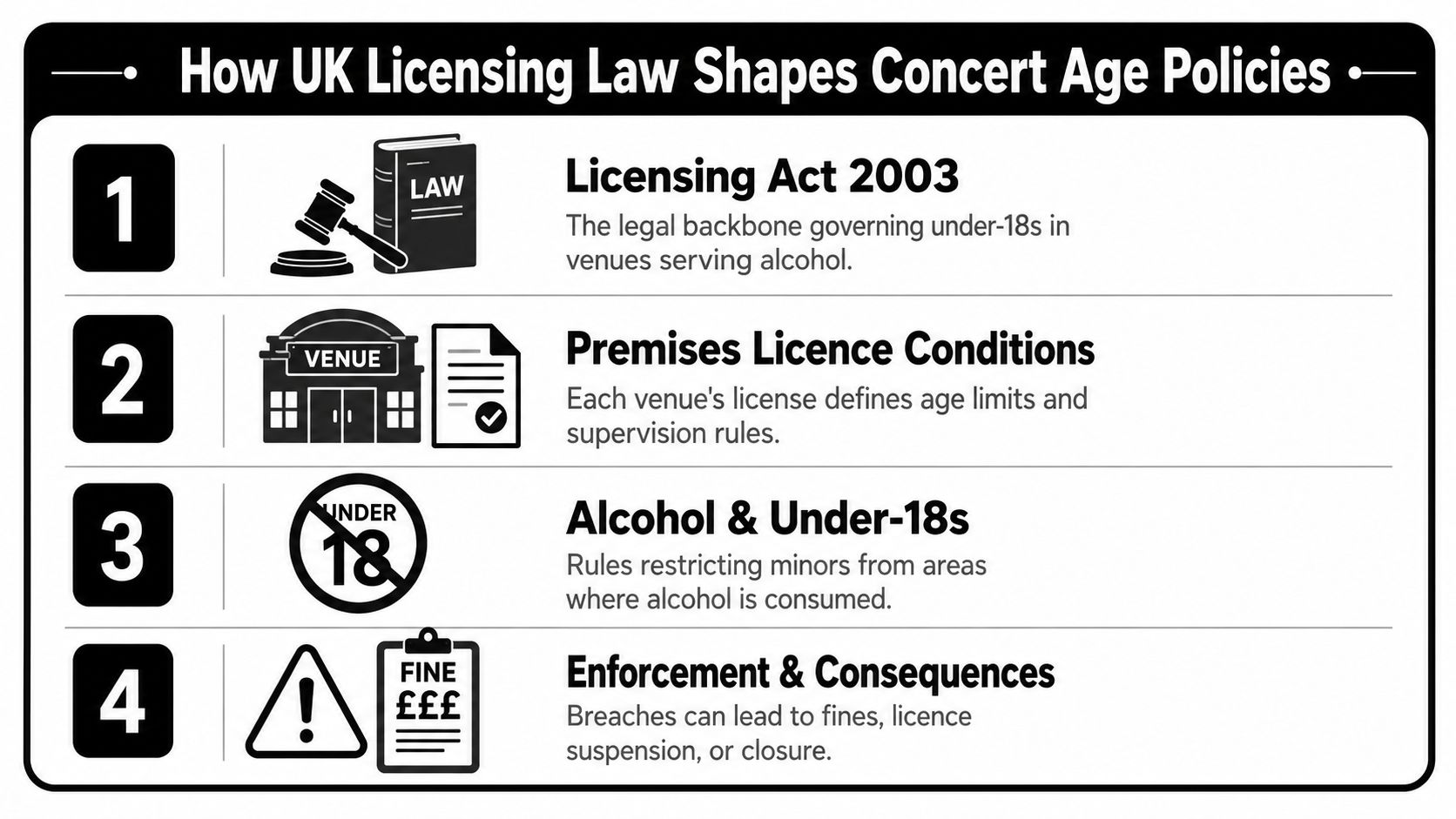
Many UK concerts consequently publish wording such as “under 16s accompanied” or “all ages with guardian”. Those phrases reflect compliance decisions, not a single nationwide minimum age. The legal framework standardised how promoters, venues, and local authorities manage regulated public performances after the 2003 law came into force, replacing a patchwork of older entertainment controls with a single licensing regime for England and Wales.
Venue Rules Versus Event-Specific Restrictions
The safest way to read concert age guidance is to separate venue policy from event policy. The venue may publish a baseline rule, while the promoter sets a stricter condition for a particular artist, tour, audience profile, or operating arrangement.
For example, The Northcourt LIVE in Abingdon, Oxfordshire, is a 200-capacity, primarily standing grassroots live music venue with limited first-come seating and free on-site parking. Paul Robins Promotions' own venue information states that The Northcourt LIVE is an adult live-music environment, and that ages 14–18 must be accompanied and supervised by a responsible adult at all times. Some performances may contain strong language or other material unsuitable for younger guests, alcohol will not be served to anyone under 18, and individual events may have additional age restrictions, so customers should check the specific event page before purchasing. See The Northcourt LIVE Venue Guide.
Policy layer | Typical rule | Who sets it | Example scenario |
|---|---|---|---|
Venue policy | A general age and accompaniment condition | Venue operator and licensing requirements | The room publishes its baseline guidance for younger attendees |
Event-specific restriction | A stricter minimum age or zone limitation | Promoter, artist team, venue and event conditions | A particular show limits standing admission or operates as over-18s only |
Time-related condition | Younger attendees may face restrictions at late hours | Licensing conditions and event management | A late-running performance requires tighter supervision or excludes children |
Ticket-zone rule | Seated and standing admission carry different conditions | Venue and event organiser | A child may be allowed in seating but not on a pitch or general standing floor |
Large-event terms commonly state age restrictions apply to pitch standing areas, with ages 14 and 15 accompanied by an adult aged 18 or over at all times. Such terms may also specify a ratio of one adult to four attendees aged 14 and 15. The wording on the exact event listing takes priority for your purchase decision. Compare the general Ticketmaster UK's age-restriction guidance with specific event terms for standing access to see how venue-wide advice and show-by-show rules can differ.
Standing Areas, Seated Zones and ID Checks
The most important practical distinction is often not whether a concert is "all ages", but where the younger attendee is allowed to stand or sit. Standing floors create a denser crowd, less predictable movement and more demanding supervision than a seated area. That's why major venue guidance commonly restricts younger children from pitch standing even when they're permitted elsewhere in the building.
Wembley Stadium's children and families guidance notes that under-2s are not permitted for most events and that wider age and accompaniment rules can vary by show. These examples show why the individual event listing should always be checked before travelling.
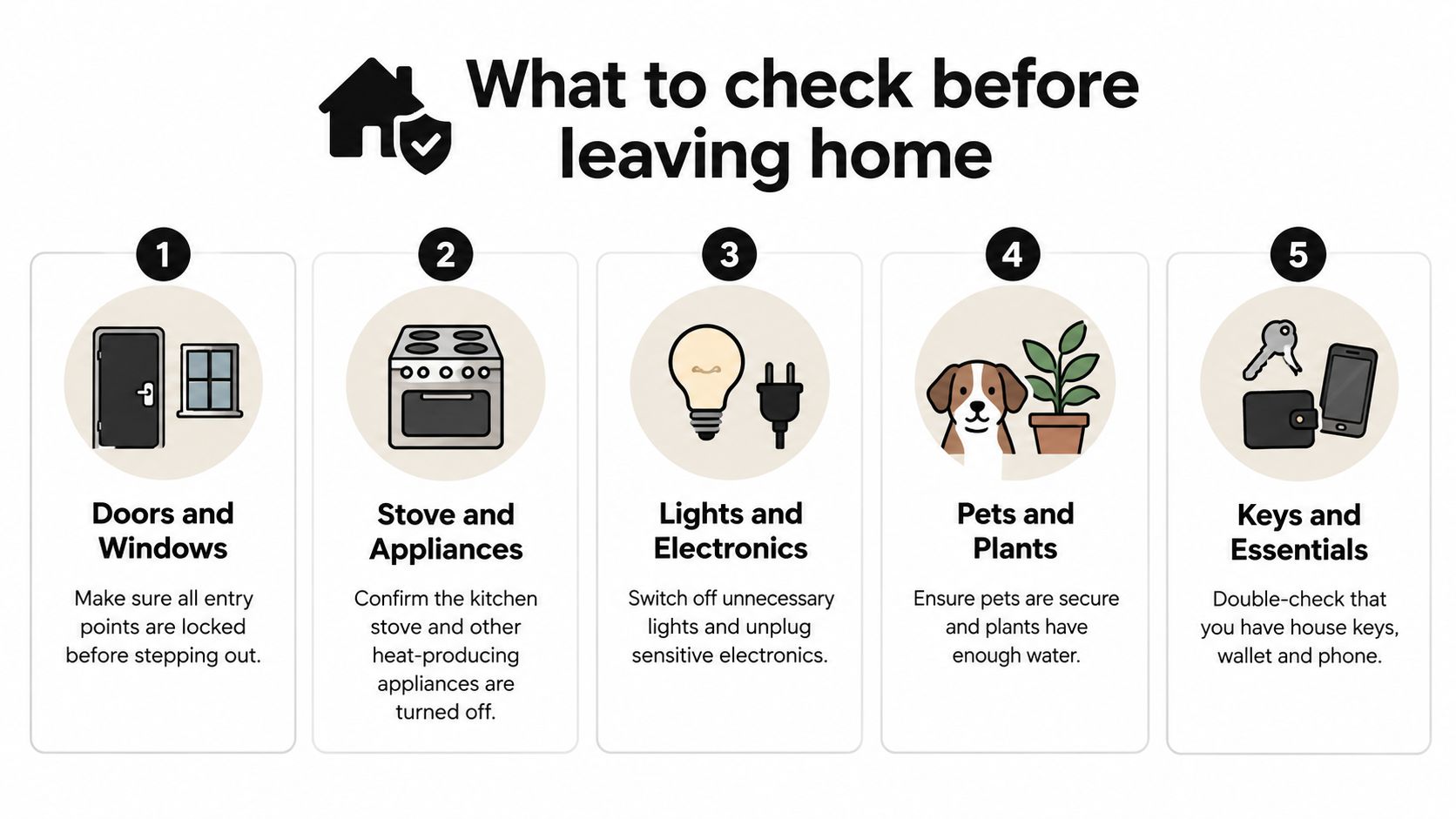
What to check before leaving home
Ticket zone: Confirm whether the ticket is seated, standing, pitch access, or another controlled area.
Accompanying adult: Read the required adult age and any stated supervision ratio. Don't assume any adult in the group automatically satisfies it.
Event timing: Check the published finish or curfew information where available. Late-night operation can affect admission and supervision conditions.
Identification: Take valid physical photo ID when the event says it may be required. A ticket can't compensate for failed age verification.
Alcohol areas: An adult's ability to buy alcohol doesn't give a younger attendee unrestricted access to every area.
Challenge 25 is an alcohol-sale check, not a universal concert-entry rule. A teenager may be refused alcohol without acceptable ID even if they're allowed into the performance, while a particular event can impose separate entry checks. Photocopies and informal digital images may not satisfy a venue's requirements, so follow the exact identification instructions on the event page.
Security staff also have to manage crowd safety, searches and access control. For useful background on the role of event security, see Amax Fire & Security Ltd for insights into arena and stadium security systems. For ticketing and admission arrangements at Paul Robins Promotions events, consult the ticket policy.
Planning a Visit to The Northcourt LIVE with Younger Fans
The Northcourt LIVE is in Abingdon, Oxfordshire, and operates primarily as a standing live-music venue. It has a capacity of 200, limited first-come seating and free on-site parking, so families should treat the exact event instructions as essential planning information rather than an afterthought.
Use this process before buying:
Read the specific event page. Age conditions can vary by show. Confirm the minimum age, accompaniment and supervision requirement, and any standing-area restriction before selecting tickets.
Buy the correct tickets. Make sure every younger attendee is covered by the stated policy. Don't buy an adult ticket and assume it changes the admission condition.
Check group arrangements. At The Northcourt LIVE, ages 14–18 must be accompanied and supervised by a responsible adult at all times. If you're attending as a mixed-age group, make sure the responsible adult stays with the younger guest throughout the visit, not just at entry.
Prepare the booking name. Customers don't need to print tickets. Admission is checked against the booking list using the name under which the tickets were booked, so the person who made the booking should be ready to identify it.
Plan the journey and departure. Use the venue information for parking and access details, then arrange transport that works for the youngest person in the group. Don't rely on a late-night decision made after the show.
The venue's standing layout makes zone guidance especially important. Limited seating is first come, so it shouldn't be treated as a guaranteed reserved family area unless the individual event specifically says so.
The Northcourt LIVE's baseline policy is that it is an adult live-music environment, ages 14–18 must be accompanied and supervised by a responsible adult at all times, and some performances may contain strong language or other material unsuitable for younger guests. Alcohol will not be served to anyone under 18. Individual events may apply stricter age restrictions, so always check the official event information before booking.
If the event is rescheduled or the published age condition changes, check the updated official event information and contact the box office before travelling. For accessibility or companion-ticket questions, use the companion tickets guidance and ask before purchasing if the information doesn't answer your situation.

Frequently Asked Questions
Can I take my 12-year-old to a concert?
It depends on the specific event and venue. Many concerts allow children under 14 with an accompanying adult, but standing areas often have stricter rules. Always check the event page for age conditions before purchasing tickets.
Can a 14-year-old go to a concert alone?
Some venues permit unaccompanied attendance from age 14 or 16, but this varies by location and event. Many promoters require accompaniment for under-16s, so verify the policy on the official event listing or contact the venue directly.
Do they check ID at 14+ concerts?
Yes, if the event specifies ID requirements. Challenge 25 is common at venues serving alcohol, and some events request photo ID for all attendees regardless of age. Bring valid physical ID to avoid issues at the door.
Can a 12-year-old stand at a concert?
Most venues restrict standing-area access for children under 14, even with accompaniment. Seated areas are more likely to accept younger attendees, but rules vary by event. Always confirm the standing-zone policy before buying tickets.
Do hospitality concert tickets have any age restrictions?
Hospitality and VIP tickets often have separate age rules from general admission. These experiences may require all attendees to be 18+ regardless of the main event's policy, so check the specific ticket terms carefully.
Key Takeaways for Concert-Goers and Families
There's no single answer to "what age can a child attend a concert?" in the UK. Licensing law, venue conditions, event-specific decisions and the time of the performance all matter. Treat the individual event listing as the controlling information, not a generic search result or the rules from a previous gig.
For families, the useful checklist is short:
Check the exact show: Read the official event information before buying.
Confirm the zone: Standing admission can carry a stricter age rule than seating.
Verify supervision arrangements: At The Northcourt LIVE, ages 14–18 must be accompanied and supervised by a responsible adult at all times, while the show may set additional requirements.
Prepare identification: Bring the physical ID requested by the venue or event. Challenge 25 can affect alcohol purchases even where concert entry is permitted.
Keep the booking details clear: Admission at Paul Robins Promotions events is checked against the booking list using the booking name. Printing isn't required.
Ask before travelling: If the wording is unclear, contact the official box office or venue rather than relying on a third-party summary.
The same discipline applies whether you're travelling from Abingdon, Oxford, Didcot, Wantage or Witney. A few minutes checking the event conditions can prevent a child being refused at the door, a group being split up, or a valid ticket becoming useless because the wrong zone or supervision arrangement was chosen.
Paul Robins Promotions provides the official online ticket office and event information for the live music events it presents at The Northcourt LIVE in Abingdon. Browse upcoming events and official tickets, then check the age conditions on your chosen show before booking.
Live photography: Alienation Photography — used with permission.
