

Crucible Theatre Seating Plan The Ultimate Guide to the Best Seats
- Tom Lynch
- Feb 2
- 13 min read

The Crucible Theatre's seating plan is built for one thing: intimacy. Its famous thrust stage means that no matter where you are in the 980-seat auditorium, you’re never more than 20 metres away from the action. The seating is steeply raked on three sides, which creates fantastic sightlines from pretty much every angle in the Stalls, Circle, and Upper Circle.
Understanding the Crucible Theatre Layout
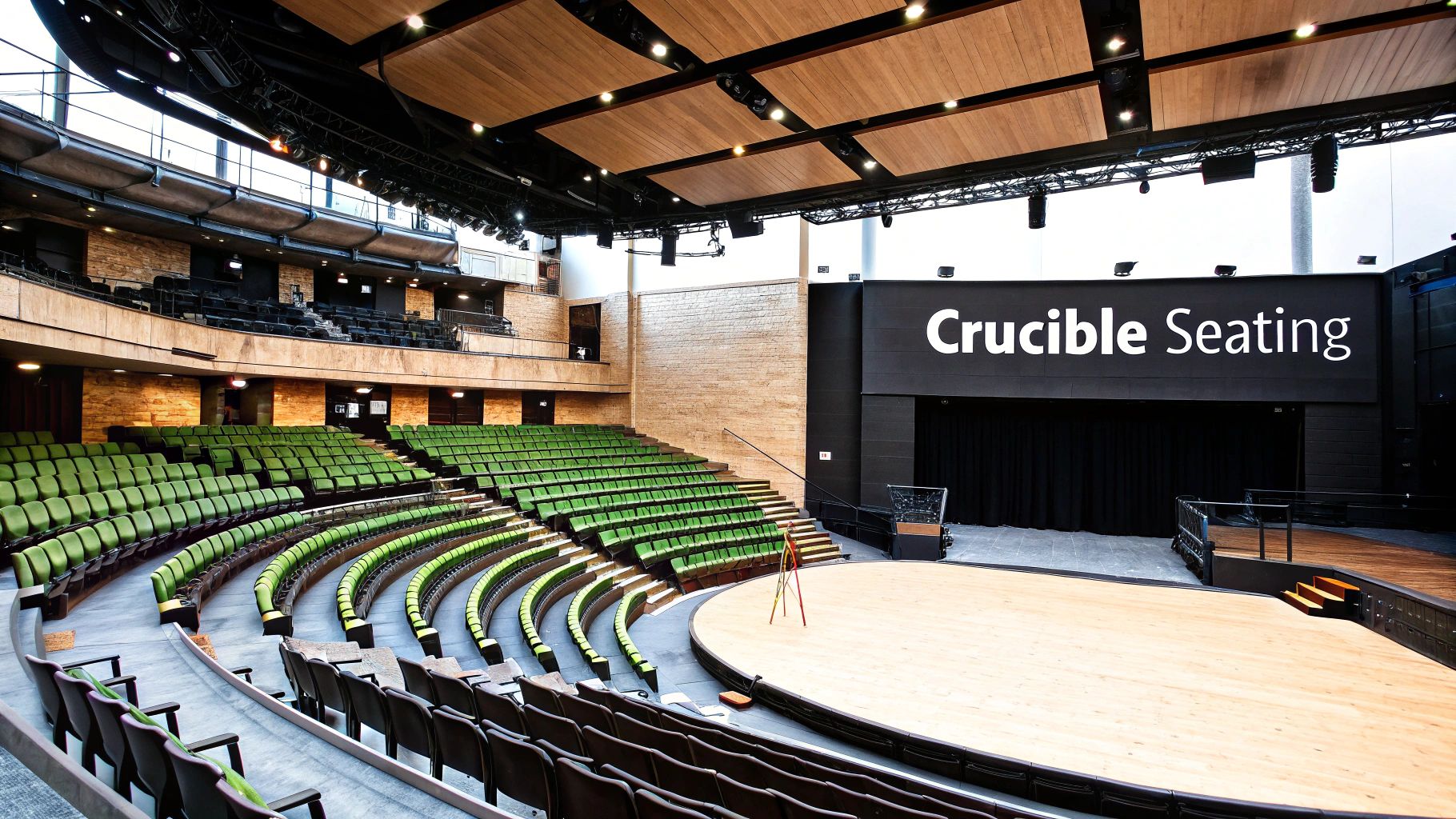
Walking into the Crucible for the first time is a different experience from a traditional theatre. You won’t find a standard proscenium arch that frames the stage like a picture. Instead, the action happens on a thrust stage that juts right out into the audience. Think of it less like watching a film and more like being a spectator in a modern amphitheatre, where the barrier between you and the performers feels like it has completely dissolved.
This design was completely intentional. When the Crucible opened back on 9 November 1971, it was considered revolutionary. Inspired by the work of theatre pioneer Sir Tyrone Guthrie, the layout was designed so that every single one of its 980 patrons feels truly part of the performance. You can read more about the theatre's historic design and its lasting impact on UK venues.
Let's break down the layout to help you pick the perfect spot for your visit.
To help you get your bearings, here's a quick overview of what each level offers.
Crucible Theatre Seating Levels at a Glance
A quick summary of the main seating areas, their location, and typical viewing experience to help you make an informed choice.
Seating Level | Location | Best For | Key Feature |
|---|---|---|---|
The Stalls | Ground floor, surrounding the stage on three sides. | Maximum immersion and feeling part of the action. | The closest you can get to the performers. |
The Circle | The first elevated tier above the Stalls. | A balanced, panoramic view of the entire stage. | Great for appreciating the full scale of a production. |
Upper Circle | The highest seating level in the theatre. | A clear, bird's-eye perspective at a great value. | The most budget-friendly seats with good sightlines. |
Each section has its own unique feel, but they all share the Crucible's core design philosophy.
Key Seating Areas
The auditorium is divided into a few distinct sections, and knowing what each one offers is the first step to choosing your ideal seat.
The Stalls: This is the ground-level seating area wrapping around the stage on three sides. If you want the most intense, up-close-and-personal view, this is where you want to be.
The Circle: As the first elevated tier, the Circle gives you a slightly more panoramic perspective. It’s perfect for taking in the whole performance space without feeling too distant.
The Upper Circle: This is the highest tier, offering a fantastic bird's-eye view of the stage. These seats are often the most budget-friendly, but you still get a great, clear view of the action.
The core principle of the Crucible's design is proximity. Whether you are in the front row of the Stalls or the back of the Upper Circle, you are never far from the heart of the performance, making every seat a good one.
This unique structure is why sightlines are excellent from almost everywhere. It’s a key reason the venue is just as beloved for world-class theatre as it is for hosting the nail-biting drama of the snooker championships. As we dig into each section, you'll get a real feel for the space and can book your tickets with confidence.
Decoding the Stalls for Ground-Level Immersion
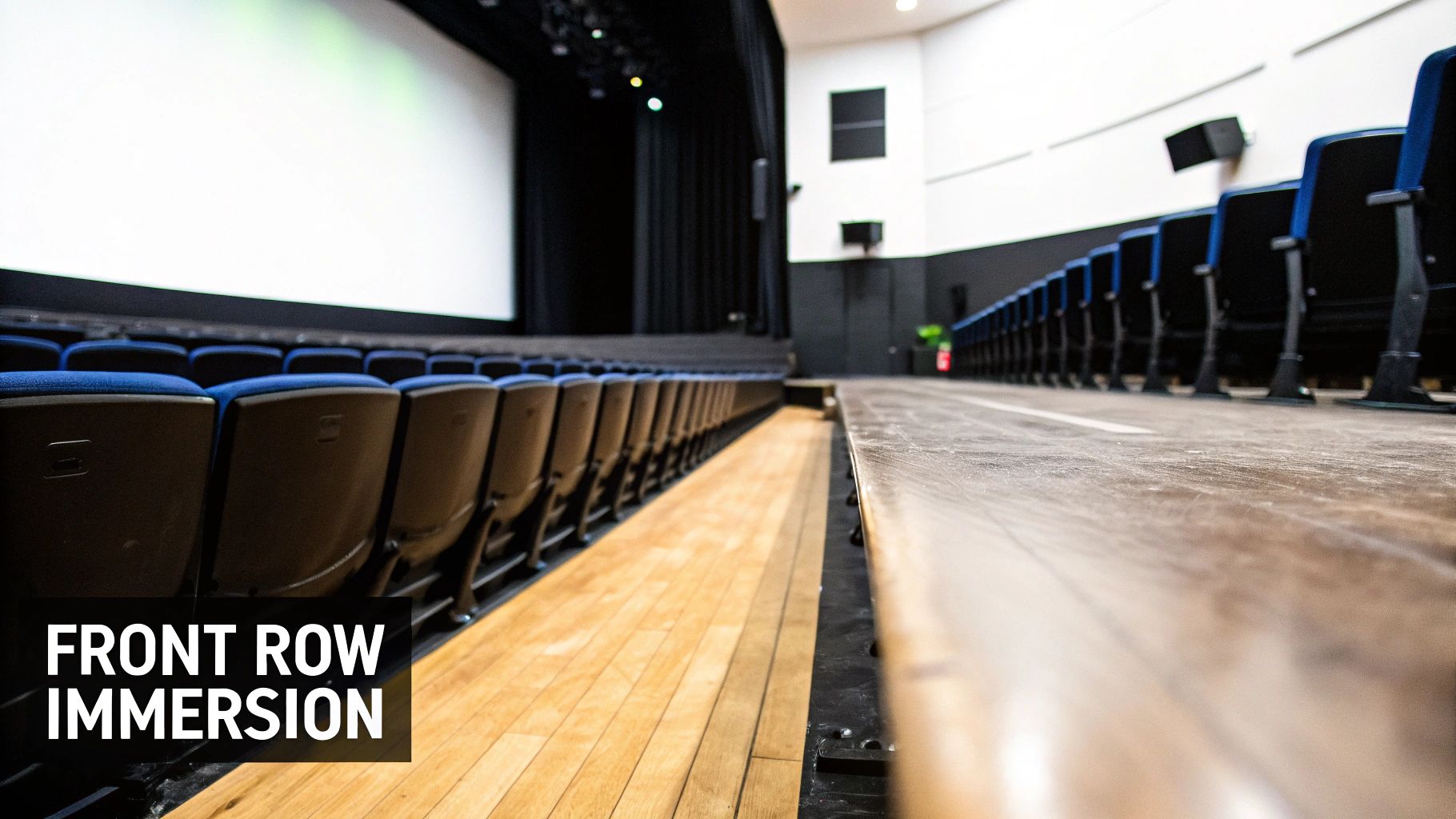
If you want to be at the heart of the action, the Stalls are where you need to be. This is the ground-floor seating that wraps around three sides of the Crucible’s famous thrust stage, putting you closer to the performance than anywhere else in the house.
Choosing a seat here isn’t just about watching a show; it’s about feeling like you’re a part of it.
Think of it like being in the front row of an intimate gig, where you can see every flicker of emotion on an actor's face and feel the energy coming right off the stage. You’re not just a spectator; you’re practically face-to-face with the performers, catching subtle moments that would be completely lost from further back.
Of course, that incredible proximity can be a double-edged sword. In some theatres, front-row seats mean craning your neck to look up. But the Crucible’s clever design counters this with a surprisingly steep rake, ensuring a comfortable view.
Sightlines From Front to Back
Even as you move towards the back of the Stalls, the view remains fantastic. The steep incline means each row is set significantly higher than the one in front of it. Your view of the stage stays remarkably clear, largely unobstructed by the person ahead—a luxury not always guaranteed in older, more traditional theatres.
This design masterstroke preserves that feeling of closeness while giving you a more complete picture of the stage. The rows further back strike a brilliant balance, blending the immersive feel of the Stalls with a broader perspective of the entire performance. For a closer look at how different venues tackle sightline issues, you might find this guide to the Floral Pavilion seating plan interesting.
For many regulars, the sweet spot is the central block of the Stalls, somewhere around rows D to G. These seats offer a perfect mix of intimate, eye-level viewing and a comfortable vantage point for the whole stage.
Central vs Side Views
Because of the Crucible’s unique layout, a "side view" here doesn't have the negative baggage it might elsewhere. The stage juts right out into the audience, so even the side sections feel incredibly close and connected to the performance.
Central Seats: These give you the most balanced, direct view. They're perfect for appreciating the symmetry of a production and taking in the full picture as the director intended.
Side Seats: Don't discount these. They can offer a really unique and dynamic perspective, letting you see interactions between actors from a completely different angle. It often adds a fascinating, almost behind-the-scenes layer to the drama.
Ultimately, picking your spot in the Stalls comes down to personal taste. Do you crave the raw, unfiltered intensity of the front row? The balanced perfection of the central block? Or the unique angle offered from the sides? Whatever you choose, the Stalls guarantee an unforgettable, up-close experience.
Right, let's head upstairs. Moving up from the Stalls, the Circle and Upper Circle offer a completely different, but just as compelling, way to see a show. These elevated tiers give you that panoramic, sweeping view of the entire stage, which can completely transform the experience. It’s a perspective often favoured by those who want to see the big picture—especially for productions with large casts or intricate choreography.
Think of it as the 'director's view'. From up here, you can appreciate the full artistry of the performance. Every lighting cue, every set change, and the precise movement of actors across the entire stage all unfold right in front of you. You see the complete picture, exactly how the production team designed it to be seen.
This comprehensive viewpoint is a key part of what makes the Crucible special. The design is so intentional that even from these higher levels, that famous sense of intimacy is never lost.
The Best Seats in the House?
Many theatre regulars will tell you that the best seats in the entire venue are in the front-central block of the Circle. Specifically, seats in Rows A and B of this section strike that perfect balance, giving you an elevated, unobstructed view without feeling disconnected from the stage.
You really get the best of both worlds: you’re close enough to see the actors' expressions clearly, but high enough to take in the full scale of the production. This makes them hugely popular for everything from gripping dramas to the tactical gameplay of a world championship snooker match.
Since it opened its doors in 1971, the Crucible's seating plan has been central to its reputation, fitting 980 people in a unique embrace that guarantees you're always close to the action. The steeply raked auditorium offers tiered stalls and circles where sightlines are fantastic, with every single seat less than 20 metres from the performers. This was a deliberate choice by the founding artistic director to forge a powerful connection between the stage and the audience. You can discover more insights about the Crucible's celebrated design here.
Navigating the Upper Circle
The Upper Circle is the highest tier, and as you'd expect, it offers the most affordable tickets while still providing excellent value. The view remains clear and comprehensive, giving you that brilliant bird's-eye perspective on the action.
A quick heads-up for the Upper Circle is the front row (Row A). While it offers a great, unobstructed view looking down, there is a safety rail in front of these seats. For most people, this rail sits below their natural line of sight, but for shorter audience members or children, it could be a minor obstruction.
To play it safe, booking from Row B backwards in the Upper Circle is often a good bet. You'll still get that fantastic elevated view without any potential interruption from the safety barrier. Ultimately, whether you choose the Circle or Upper Circle, you’re guaranteed a superb vantage point for appreciating the grand scale of any Crucible performance.
Choosing the Best Seats for Snooker vs Theatre
Picking the right seat at the Crucible isn't about finding a single "best" spot; it's about matching your seat to the show. The perfect vantage point for a nail-biting snooker final is worlds away from the ideal seat for an intimate stage drama. Your ticket choice really comes down to the kind of experience you're after.
Best Seats by Event Type Snooker vs Theatre
To help you decide, here's a quick comparison of how the seating areas work for the two main types of events at the Crucible.
Seating Area | Best for Snooker | Best for Theatre | Consideration |
|---|---|---|---|
Front Stalls | Unbeatable for up-close intensity. You'll hear every cue strike and feel the tension. | Extremely immersive, putting you right into the action. You'll see every facial expression. | You get a low-angle view. For snooker, this means less of a strategic overview. |
Rear Stalls | A good balance of immersion and a slightly better overview of the table layout. | Still offers a fantastic connection to the stage, but with a more complete view of the set. | A great all-rounder for both event types if you're not sure which to prioritise. |
Circle | The classic choice for a full, tactical view of the table. You can follow the geometry of every shot. | Provides the most balanced audio and visual experience, seeing the performance as the director intended. | You're further from the action, but you gain a fantastic overall perspective. |
Side Seats | Can offer a unique side-on perspective of the players and the full table. | Offers a different, often more personal angle on the actors' interactions. | Be mindful of potential sightline restrictions, especially for theatre productions with wide sets. |
This table shows how the venue’s brilliant design offers distinct advantages depending on whether you're there for a safety battle or a soliloquy.
This hierarchy of viewing experiences is what makes the Crucible's design so special, prioritising different perspectives from its main seating areas.
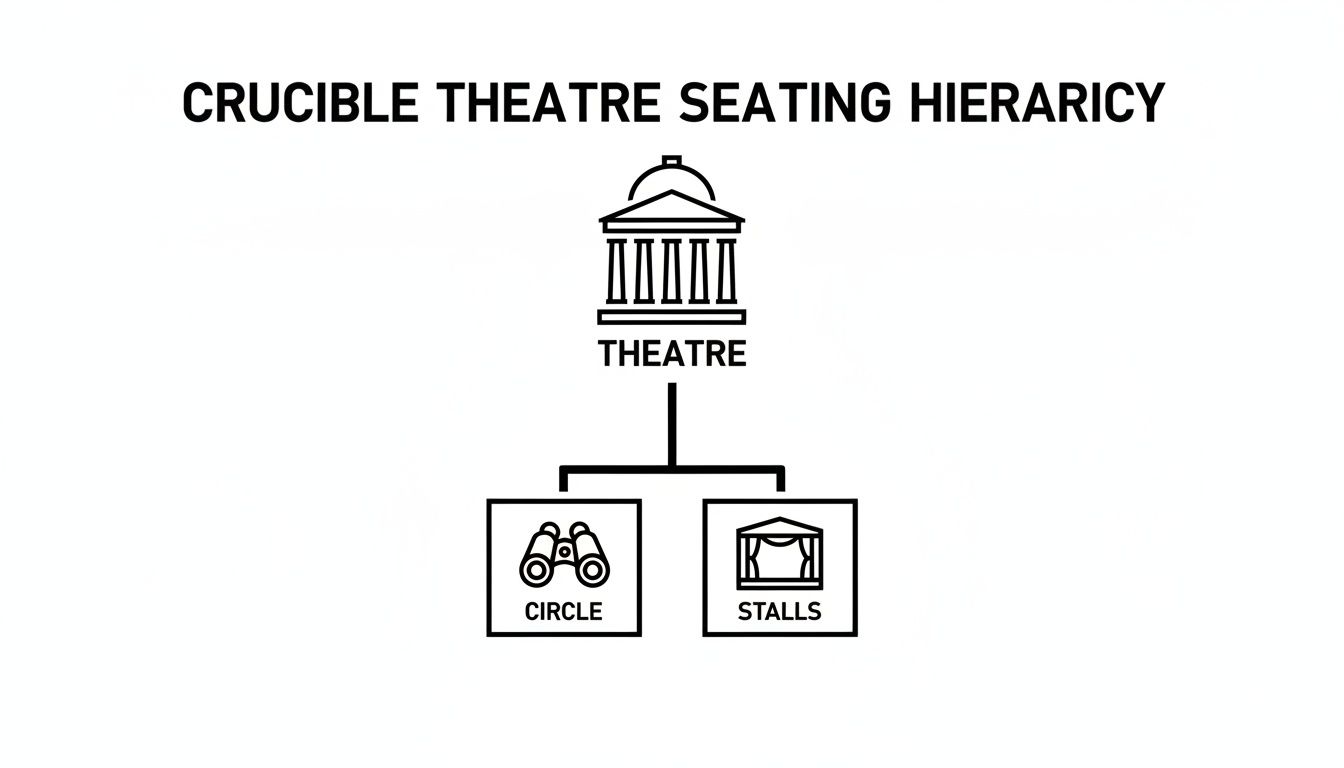
The infographic perfectly illustrates how the Stalls offer that ground-level immersion, while the Circle gives you a balanced, elevated viewpoint to appreciate the full scale of any performance.
Seating for Snooker Success
When the snooker tables arrive, the entire dynamic of the auditorium shifts. Fans will always debate the best spots, but the choice generally breaks down into two camps:
Behind the Players: Sitting behind the baulk line gives you a player's-eye view right down the table. You see the shots exactly as they do, which is an incredible way to appreciate their skill and decision-making.
Side-On View: A seat along the side of the table gives a much clearer view of both players at once and the entire table layout. This makes it far easier to follow the strategic ebb and flow of a frame, and many feel it's the best compromise between closeness and clarity.
The Crucible’s seating plan masterfully accommodates exactly 980 people, and even the farthest seat is just 22 yards from the stage. This incredible intimacy is a huge part of its magic. This capacity has been a core metric since 1977, with the World Snooker Championship famously achieving 100% attendance and reaching a global TV audience of 500 million.
Perfect Placement for Plays
For a play, the considerations are completely different. While there are genuinely no bad seats, your choice definitely affects your connection to the story unfolding on stage.
If you want a truly immersive experience, nothing beats the central blocks of the Stalls or the front few rows of the Circle. This is where you’ll get the most balanced sound and visuals, seeing and hearing the performance exactly as the director envisioned. You can learn more about what to look for in a great live venue in our related article.
Ultimately, whether you’re settling in for a tense safety battle or a powerful soliloquy, the Crucible seating plan has the perfect spot waiting for you.
A Smooth Visit: Accessibility and Booking Your Tickets
Making sure everyone feels welcome and has a brilliant time is clearly a big part of the Crucible's ethos. This thinking is built right into the theatre’s design, from how you find the best accessible seats to the nitty-gritty of booking your tickets.
The theatre is well-prepared for wheelchair users, which is great to see. You’ll find dedicated wheelchair spaces on every level of the auditorium, meaning you aren’t restricted to just one area and can choose a viewpoint that works for you. These spots are smartly positioned for clear, unobstructed views, and you can always book a companion seat right next to you.
Getting Around and Special Performances
Reaching any of the seating tiers—Stalls, Circle, or Upper Circle—is straightforward thanks to lift access throughout the building. If you have mobility needs, you won’t have to worry about tackling stairs. Plus, there are accessible toilets conveniently located on each floor.
To help make sure every performance can be enjoyed by all, the Crucible also schedules a variety of assisted performances during its season.
Audio-Described Performances: These give you live commentary through a discreet headset, describing the action, costumes, and scenery on stage.
Captioned Performances: Think of these like subtitles for a film. Dialogue and key sound effects are displayed on screens, perfect for patrons who are deaf or hard of hearing.
British Sign Language (BSL) Interpreted Performances: For these shows, an interpreter stands on stage to sign the dialogue and sound in real-time.
It's always a good idea to mention any specific access needs you have when you call the box office. This lets the team give you the best advice and help you find the most suitable seats for a comfortable visit.
Tips for Booking Your Tickets
Getting your hands on the best seats often boils down to good timing and knowing how the system works. The Crucible uses a banded pricing structure, so ticket prices change depending on where you sit and how popular a particular performance is. As a general rule, you'll often find that mid-week shows are a bit cheaper than Friday or Saturday nights.
If a show you’re desperate to see is sold out—especially something with huge demand like the World Snooker Championship—don’t give up. The theatre often runs an official resale system where ticket holders can sell on any seats they can no longer use. Your safest bet is to keep checking the official website for legitimate tickets being sold at their original face value.
Finally, getting your head around the seat numbering will save any head-scratching when you arrive. Because of the Crucible’s semi-circular 'thrust' stage, the seat numbers in each block usually run sequentially from one side to the other. In a central block, for instance, the lowest and highest numbers will be on the aisles, with the middle seats being somewhere around numbers 14 or 15. The interactive crucible theatre seating plan on the booking site is your best friend here, as it shows you precisely where you’ll be. For more advice on making the most of different venues, take a look at our visitor's guide to the Witney Corn Exchange.
Your Crucible Seating Questions Answered
Even with the best seating plan in hand, a few questions always pop up when you're about to book. Think of this as the final piece of the puzzle, answering those common queries so you can choose your seats with total confidence.
Are There Any Seats with a Restricted View?
Honestly, thanks to the brilliant design of that thrust stage and the steep rake of the seats, genuinely "bad" views are incredibly rare at the Crucible. Everyone gets a pretty fantastic look at the action.
That said, there are a couple of minor things to keep in mind. Some seats in the very front row of the Upper Circle (Row A) might have a thin safety rail in the eyeline, which some people find distracting. For theatre shows with massive, sprawling sets, you might also miss a tiny sliver of the action at the absolute back of the stage if you're in the extreme side seats of the Stalls. The theatre is great about this, though – they’ll always flag any seat with a known viewing issue on the official booking site.
What's the Difference Between the Circle and Upper Circle?
Good question! The Circle (sometimes called the Dress Circle) is the first tier up from the ground floor. It's the sweet spot for many regulars, offering a perfect blend of being close enough to feel involved while getting a brilliant, panoramic view of the entire stage.
The Upper Circle is the highest level in the theatre. While it's the furthest back, the view is still surprisingly clear and direct because of how steeply the seats are tiered. This is often where you'll find the most affordable tickets, making it a fantastic value-for-money choice.
The main thing to remember about the Crucible Theatre seating plan is that it was designed to make everyone feel part of the show. Excellent sightlines are the standard, not a lucky bonus.
How Does the Seat Numbering Work?
The seating wraps around the stage in a semi-circle, so the numbering is pretty straightforward. For the most part, the numbers run sequentially from one side of a block to the other, starting with low numbers.
As a rule of thumb, in a central block, the middle seat will be somewhere around 14 or 15. In the side blocks, seat 1 is usually on the aisle closest to the centre. The absolute best way to get your bearings is to use the interactive map on the official website when you’re booking – you can see exactly where you'll be.
Is There Lift Access to All Levels?
Yes, absolutely. The Crucible is well-equipped with lifts that service all levels of the auditorium, from the Stalls right up to the Upper Circle. This ensures the entire venue is accessible for anyone with mobility needs.
You'll also find accessible toilets on each level. It’s always a good idea to let the box office know about any specific requirements when you book your tickets, just so they can make sure your visit is as smooth as possible.
Here at Paul Robins Promotions, we’re all about creating unforgettable memories through live entertainment. While our home turf is rocking out in Abingdon, we hope this guide helps you have an amazing time at your next show in Sheffield. For incredible tribute acts and original artists closer to home, why not check out our upcoming gigs?
Find your next favourite show at Paul Robins Promotions.